Peeper cam background
This "new, smaller" wireless camera came about as the result of several factors coming together. After building the camera described below and seeing how well it worked in the field for several years, I had a few requests for a smaller version from researchers that worked with the smaller Red-cockaded Woodpecker.
In July 2010 I was contacted by Kaitlyn Thomason, a young lady who had attended the Arkansas Audubon Society's Halberg Ecology Camp. She wanted to do something to help Red-cockaded Woodpeckers and the researchers that study them, so she applied for a grant that would have funded me to build 15 of the cameras to give away to researchers. We didn't get the grant, but I decided to proceed with the project on my own as a commercial venture.
The first version
 In 2006 I began working with Brandon Noel, then a PhD candidate at Arkansas State University in Jonesboro under Dr. Jim Bednarz. In the picture at the right, you can see Brandon (right) and his brother Duane raising a first-generation wireless cavity inspection camera to a Pileated Woodpecker (PIWO) nest cavity. Brandon studied PIWOs over a several-year period in eastern Arkansas for his PhD, which he received in 2011. He and his field crew monitored numerous nests and radio-tagged many birds to study their movements. They worked extensively in both the White River and Cache River National Wildlife Refuges. They kept an eye out for IBWOs, but never reported seeing one to me.
The nest cavity in the Water Tupelo (pictured at right) is 49' high, which makes getting a peeper-cam mounted on a wobbly 50' telescoping pole into a ~3.5" diameter cavity an extreme challenge. To make matters worse, the sun was almost directly above, so seeing the cavity from the ground was very difficult. The camera swayed about on the end of the pole and finally went into the cavity. There were two eggs in the cavity (the video taken by the wireless camera was recorded on a camcorder on the ground for later reference).
Click on the picture for a larger version - look for the wireless camera at the top of the white pole.
The one-minute video below shows the camera in action at this cavity:
The paper that Brandon Noel and I co-authored detailing the wireless cavity-viewing camera that I modified for his use was published in Vol. 81, No. 2 of the Journal of Field Ornithology.

Wireless Cavity Inspection Camera


May 16, 2025 - A NEW MODEL HAS ARRIVED!
Sales of the original camera systems have been suspended, as we are out of them and cannot get the parts needed to make new ones. Repairs and support will continue on the original systems.
If you need a monitor, we have a limited number of 2.5" non-recording monitors available that will work with your existing camera system. We also have a few used recording monitors. If you are interested in either type of monitor, contact us at david@ibwo.org for pricing and availability.
Change happens, and while a complete redesign of a product that has been graciously embraced by bird researchers all over the world was not on our list of things to do right now, we have spent the last few months redesigning and working to produce a product that will meet your field research needs and be an improvement in many ways over the previous version.
Why the change? First, customers have often asked for a camera that interfaces with smart phones, eliminating the need to charge and carry a dedicated monitor. Secondly, electronic parts used to make the previous version have become obsolete and we are no longer able to find a source for those. So we now have the Delta.25, IBWO’s next generation peeping camera system.
The Delta.25 Camera - now available
- Interfaces via Wi-Fi with a smart phone - Android or iPhone
- Features a fully aluminum body for extra sturdiness
- Mounts to poles the same way as the previous model
- Has much better signal strength and higher resolution images (1920 x 1080 vs. 640 x 480)
- Has a 1" diameter vs. 1.4" so inserting into cavities should be easier
- Has a cavity viewing depth of 7" vs. 7.5" for the previous model
Included with each Delta.25 camera system:
- Wireless camera with built-in rechargeable Li-ion battery
- A micro-USB charging cable and wall charging cube
- Flexible antenna-protecting cover
- A 2" long flexible connector with 1/4"-20 threads and a 3/4" long 1/4”-20 threaded set screw for mounting the camera to either a male or female screw mount
- Instruction manual
- Carrying bag
Service and repairs on the original camera version will still be available for the foreseeable future. Failed video circuit boards and cracked monitor screens may not be repairable. Contact ibwo.org before returning items that need repair.
Portable Battery Charger (for the original model)
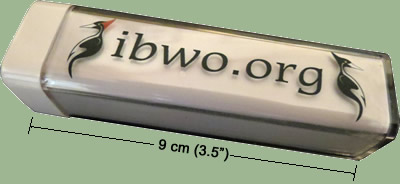
The optional portable charging unit ("battery pack") can be used to recharge your wireless camera and your monitor/DVR. You may find this useful during long days in the field. (It can also be used to charge many other devices, such as cell phones, if you have the proper cable.)
The battery pack will completely charge your camera three times before it needs recharging.
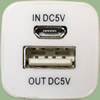
The battery pack comes with two cables: one for charging the camera and/or monitor from the battery pack (note that this is a custom cable with the negative tip polarity for the ibwo.org camera and monitor), and one for recharging the battery from a USB source, such as a computer or USB power supply. By using the charging splitter cable that comes with your camera system, you can charge two devices at the same time (camera and monitor, two cameras, etc).
| NEW Delta.25 camera system (no accessories required): $575 | |
| Replacement/extra parts for the original model: | |
| Portable battery pack for charging the camera and monitor: $25 | |
| Replacement flex mount: $8 | |
| Replacement silicone antenna cover: $8 | |
| Extra 120V AC charger: $15 | |
| Extra 12V DC charger: $15 | |
Shipping charges (USPS Ground) to the continental U.S. or Canada will be added at checkout. Shipping is calculated from the total sales amount as follows:
* Up to $100 - shipping is $8
* > $100 and up to $400 - shipping is $14
* Over $400 - shipping is $20 (U.S), or $75 or $100 to Canada (depending on the type of shipping)
Contact us for expedited shipping. If you require shipping to a non-U.S. address other than Canada, you must provide a pre-paid shipping label. Contact us for shipping details.
Prefer to use a purchase order or pay by check? Send an email to david@ibwo.org with details.
Accessories
Other than the portable battery pack (for the original model) described above, we do not sell any accessories for the camera systems. However, you may want to purchase a pole for lifting the camera up to nest cavities:
Telescoping pole - We have used a 50' (15 m) telescoping fiberglass pole for reaching tree cavities. You can find the Seco CMR-50 that we used at Tiger Supplies or at Baseline Equipment Company and possibly at other places. Be sure to select the 50' option (model 90182).
Warranty Information
The wireless camera and monitor/DVR, and the Delta.25 model, are warranted to be free from defects for a period of 90 days from the date of purchase. This does not include damage from water or from abuse. Please contact david@ibwo.org for return instructions.
Repair Information
If you need service on your camera system, please contact david@ibwo.org and describe the problem. You will receive return instructions and a price quote on the repair. If the item cannot be repaired, you will not be charged. Repairs also come with a 90-day warranty.
Below are three still images taken by the Delta.25 camera inside Red-cockaded Woodpecker cavities (click on the image to see the original size and quality).


Older images taken with the original camera model:
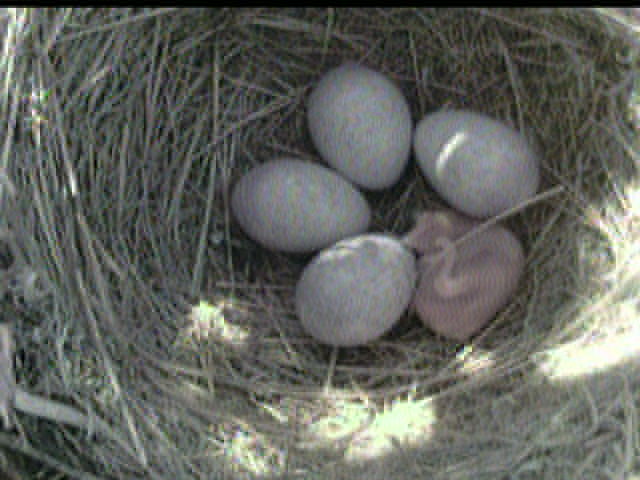
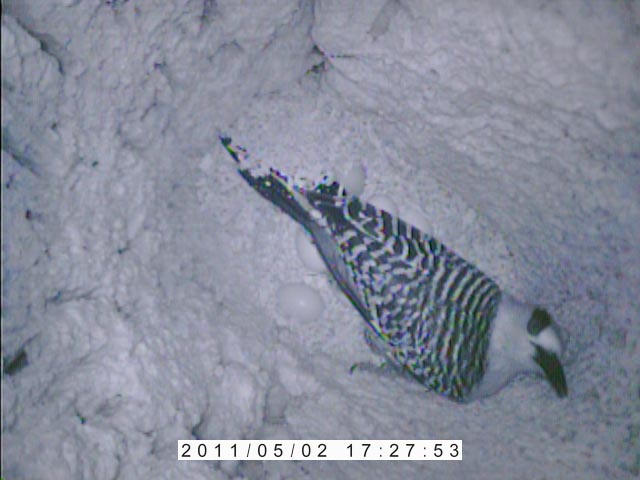 The late Dr. Jim Wiley of the University of Maryland Eastern Shore took the first of the original camera models to Cuba in 2011 to help with his research. The image to the right shows an adult West Indian Woodpecker with eggs. Dr. Wiley's camera has infrared LEDs, so the image is grayscale. Click here to see more images from Cuba (Fernandina's Flicker and Bare-legged Owl).
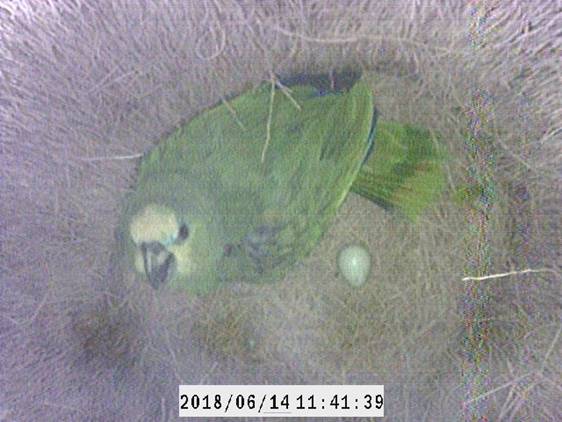
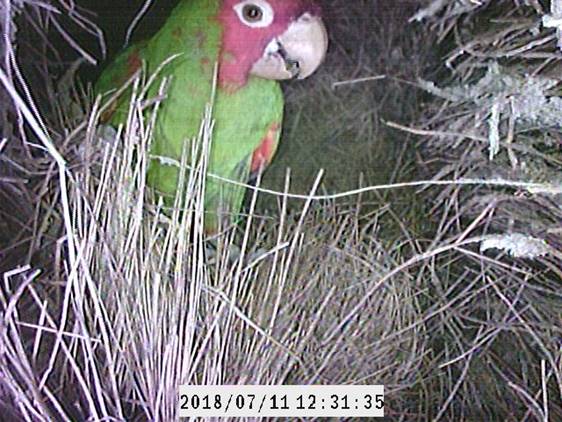
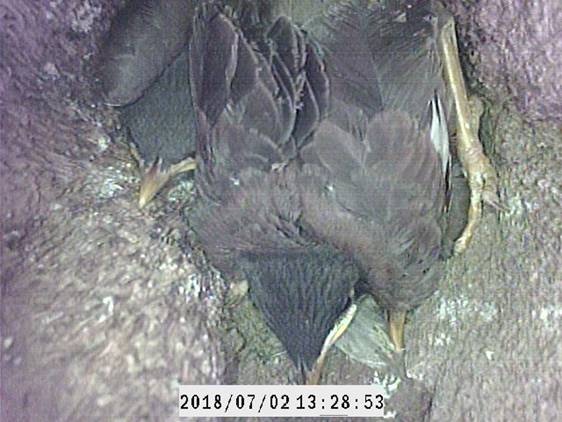
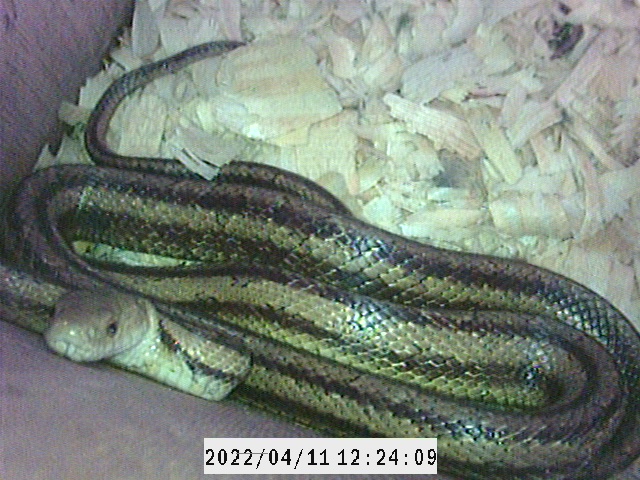
Josh Diamond took the photos below of some interesting "non-woodpeckers" in Florida.
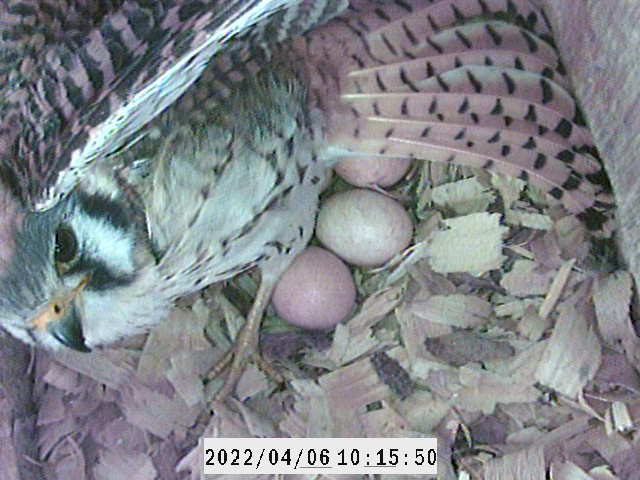
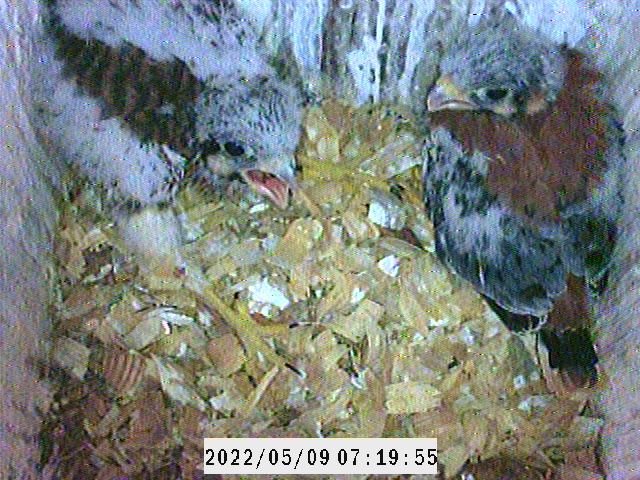
The Florida Fish & Wildlife Conservation Commission monitors American Kestrel nests in Florida:
Every bird is assigned such a code, and there are easy rules. Read about the naming rules here. For more information contact david@ibwo.org
All content on this website © David Luneau unless otherwise indicated.